How Whole House Fans Work (And When They Actually Cool Your Home)
How whole house fans work comes down to one simple idea: moving a large volume of air, fast, using the temperature difference between inside and outside. There's no refrigerant, no compressor, and no cooling coil involved — just a powerful fan pulling cool outdoor air through your open windows and pushing warm indoor air up into the attic and out.
That simplicity is exactly why the mechanism matters. A whole house fan only works when outside air is actually cooler than inside air, which means understanding how it works also tells you when to use it — and when to leave it off and run your AC instead.
Here's the mechanism, the conditions it needs, and how to tell if it's doing its job.
The Basic Airflow Path
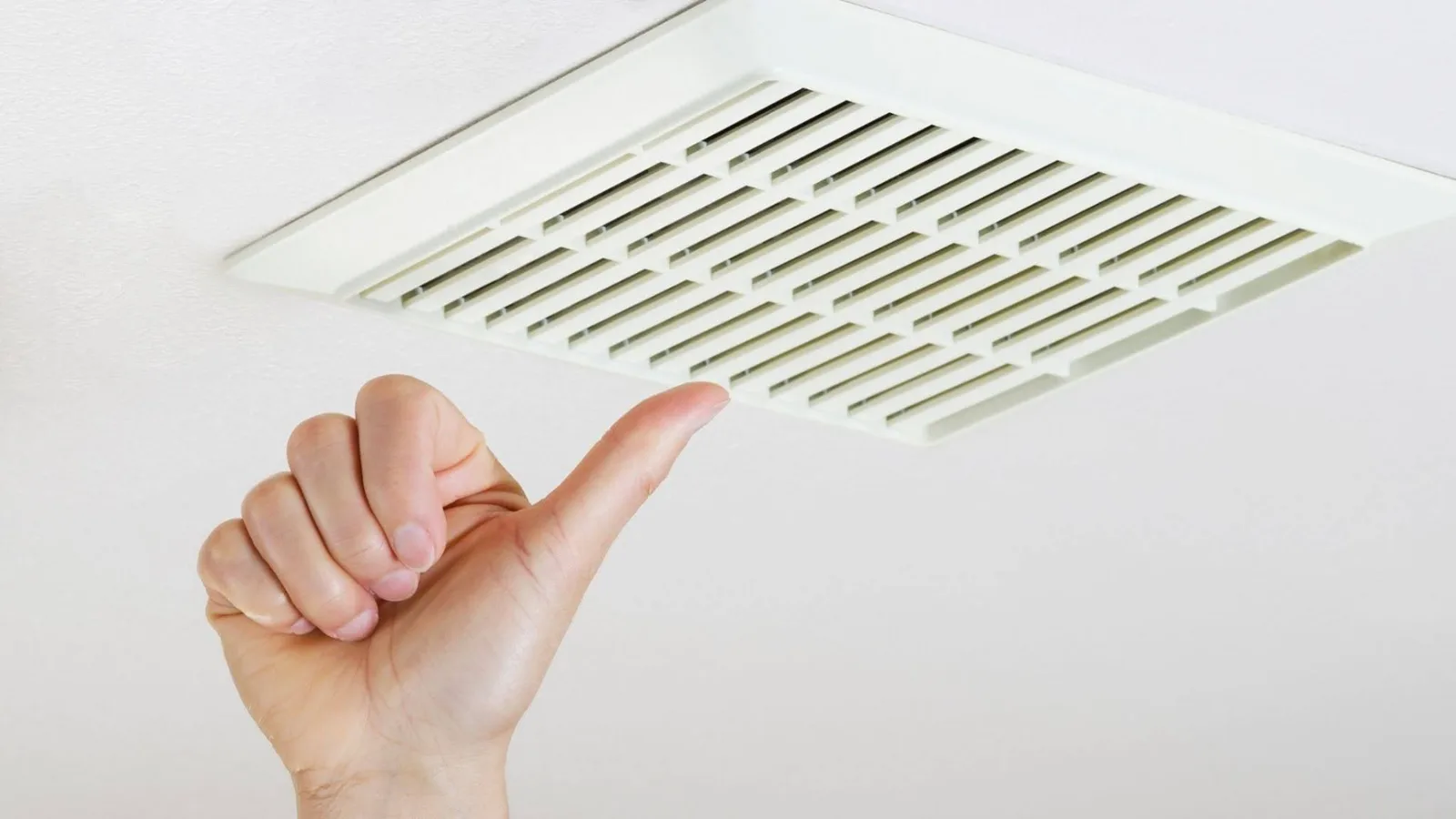
A whole house fan installs in a central ceiling location — typically at the top of a stairwell or hallway — and connects to the attic above it. When you open windows around the house and turn the fan on, it pulls indoor air up through the ceiling grille and pushes it into the attic, where it escapes through the attic's vents (Building America Solution Center, a Department of Energy-funded resource).
As that indoor air leaves, it has to be replaced from somewhere — and that's what the open windows are for. Fresh, cooler outdoor air gets pulled in continuously to replace the air the fan is exhausting, and within a few minutes, the entire volume of air in the house has been exchanged for cooler outside air.
Why It Only Works Under Certain Conditions
This is the piece that trips people up: a whole house fan doesn't generate cold air, so it only works when outdoor air is genuinely cooler than indoor air. BASC's guidance identifies the ideal conditions as nighttime lows below roughly 67°F, with at least a 25°F swing between the day's high and the night's low — the kind of pattern common on summer nights across California's Central Valley, Sacramento, and inland Southern California.
Run a whole house fan when it's hotter outside than inside, and you're doing the opposite of cooling — you'll be pulling hot air into the house. That's the single most common mistake, and it's also the answer to "whole house fan when to use": mornings and evenings when the outdoor thermometer reads lower than your indoor one, not the middle of a 100-degree afternoon.
How Well Whole House Fans Work Depends on Sizing
How well whole house fans work in practice depends heavily on whether the fan actually matches the home. Sizing guidance from BASC recommends 0.2 to 0.375 CFM (cubic feet per minute) of airflow per cubic foot of conditioned space, which is why a fan that works great in a 1,500-square-foot home won't necessarily perform the same way in a 3,000-square-foot one.
The attic side of the equation matters just as much. The fan needs somewhere for all that exhausted air to actually go — BASC recommends at least 1 square foot of net-free attic vent area for every 750 CFM of fan airflow, doubled if the vents have insect screens. Undersized attic venting is one of the most common reasons a correctly chosen fan still underperforms.
The Ventilation Principle Behind Why This Saves Energy
The reason this mechanism translates into real savings is straightforward: moving air with a fan takes far less energy than running a refrigeration cycle. The U.S. Department of Energy identifies ventilation as the least expensive, most energy-efficient way to cool a home, and notes that switching to better cooling and ventilation practices can cut air conditioning energy use by 20 to 50 percent (DOE).
A whole house fan isn't meant to replace your air conditioner on every single day of summer — it's meant to cover the hours when opening windows and moving air does the job just as well, which reduces how much your AC has to run overall.
Turning What You've Learned Into the Right Fan for Your Home
Understanding how whole house fans work is really understanding three things at once: the airflow path through the house and into the attic, the outdoor-vs-indoor temperature condition that makes it effective, and the sizing math that determines whether a given fan actually moves enough air for your specific home.
Get any one of those wrong, and the fan either underperforms or gets used at the wrong times — which is usually where "this didn't work like I expected" complaints come from, more than any flaw in the technology itself.
If you're trying to figure out whether your home's climate pattern and layout are a good fit, reach out to our team — we're happy to walk through it with you before you buy anything.
FAQ
How whole house fan works in a two-story home?
The same principle applies, but attic vent area and window placement matter more, since a two-story home typically has less soffit vent area relative to its air volume than a one-story home of the same size.
Whole house fan when to use — morning or night?
Both, whenever outdoor temperature is lower than indoor temperature. Many households run it in the evening as the outdoor air cools and again in the early morning before the day heats up.
How well do whole house fans work compared to air conditioning?
They work differently, not necessarily better or worse — a whole house fan cools during the temperature window when outside air is cooler than inside, while AC works regardless of outdoor temperature. Most homes use both, at different times.
Do I need to open specific windows for a whole house fan to work?
Open windows throughout the house rather than just one or two, so air enters evenly and the fan isn't drawing all its intake air through a single opening.
Can a whole house fan work in a humid climate?
It's less effective in humid regions, since running it can pull in humid air that makes indoor comfort worse rather than better. It performs best in dry-summer climates like California's Central Valley.
Get a Free Quote Today
Ready to save up to 90% on your cooling costs? Contact Fresno's trusted QuietCool Platinum Dealer for a free consultation.