
Solar powered
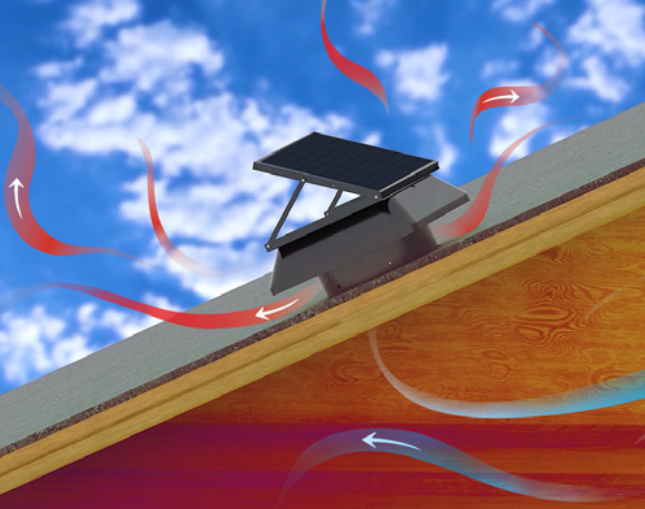
The sun that heats your attic can also vent it
A solar attic fan runs hardest exactly when you need it — midday, full sun — with no wiring run, no added circuit and nothing on your meter.
Where solar fits well
Solar units are the straightforward choice when running power to the attic is expensive or disruptive, when you want ventilation with zero operating cost, or when a detached garage or shop needs venting without a new circuit.
The trade-off is honest: output tracks sunlight. Output tapers in the late afternoon just as attic heat peaks, and a panel shaded by a tree or a neighboring roof underperforms its rating. Some units offer a thermostat and an optional AC adapter to cover that window.
What to check before buying
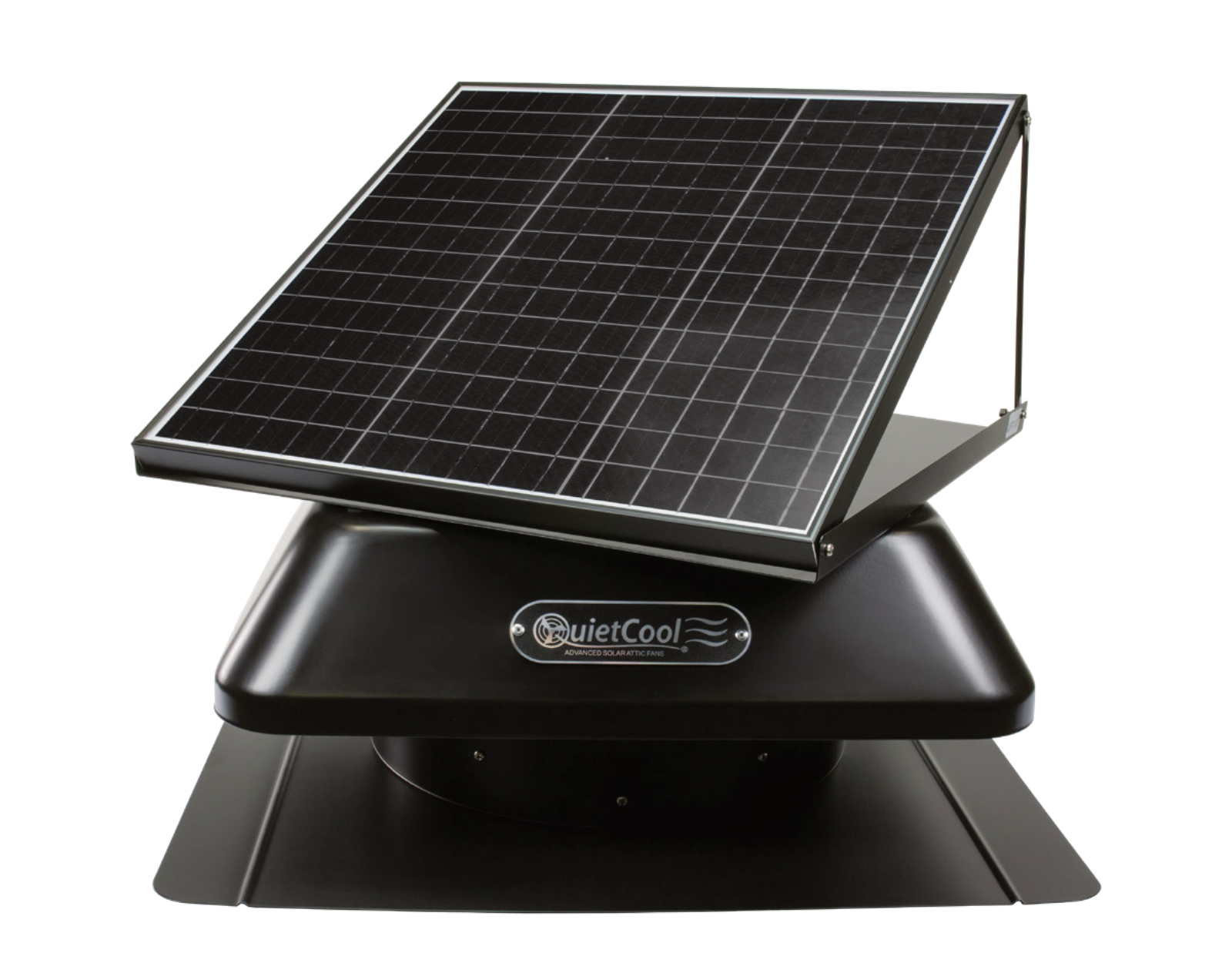
- Panel wattage and whether the fan is rated at that wattage or at ideal lab conditions
- Whether the panel is adjustable and can face true south
- Shading across the day, not just at the moment of the site visit
- Brushless DC motor, which outlasts brushed motors in attic heat
- Whether intake venting can support the airflow — same rule as any exhaust fan
CFM ratings on solar fans are often quoted at peak sun with no static pressure. Real-world output through actual attic venting is lower. We size on the realistic number.
Questions we get about solar attic fans
Do solar attic fans qualify for a tax credit?
Federal residential clean energy credits have covered qualifying solar products in the past, and rules change. Confirm current eligibility with your tax advisor — we can provide product documentation.
Will it work on a cloudy day?
It will turn over slowly. Output is roughly proportional to sunlight, so overcast days give you a fraction of rated airflow — which is usually fine, because that is also when attic heat is lower.