
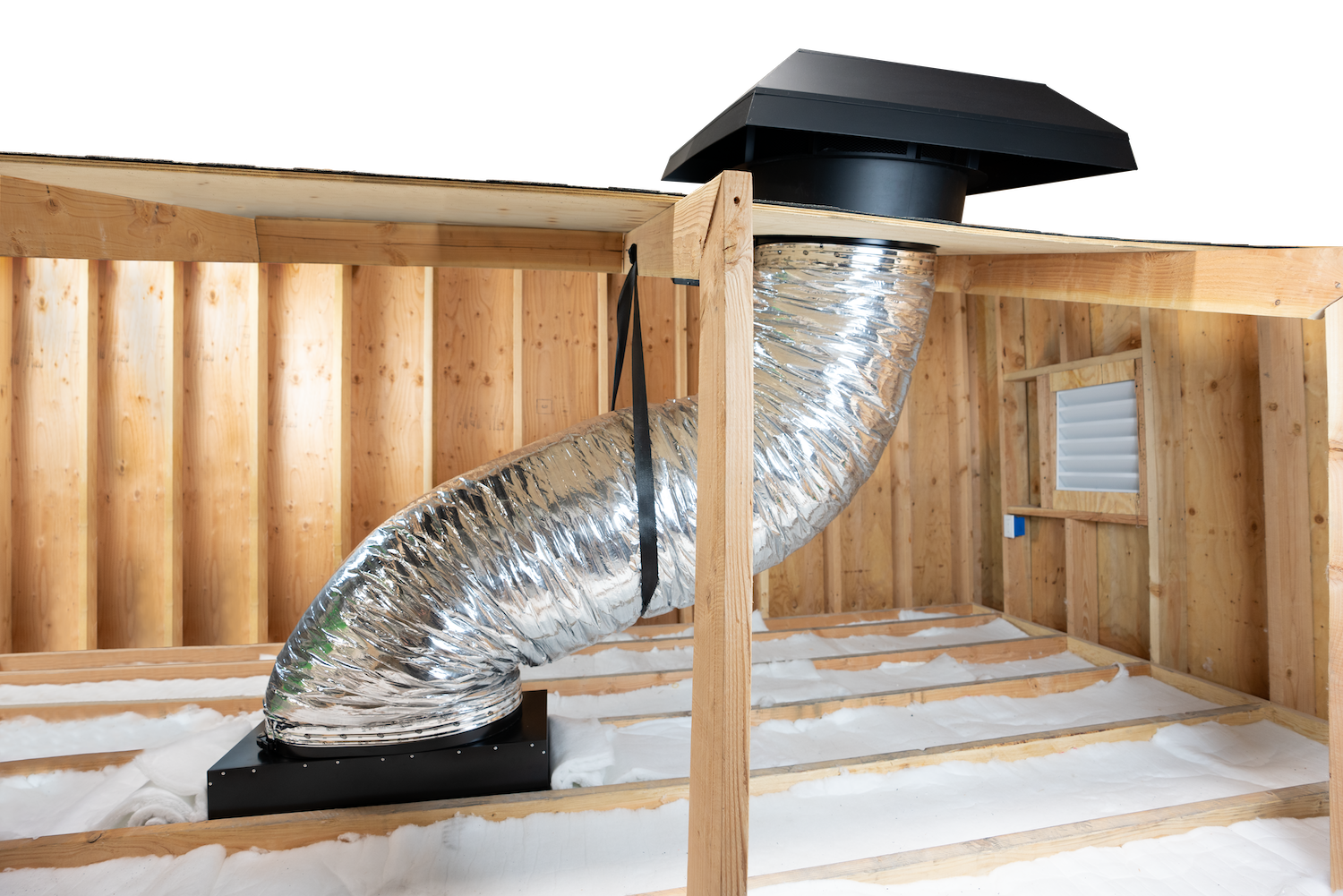
Direct Attic Ventilation
Roof mounted attic fans are installed directly on your roof, creating the most efficient path for hot air to escape from your attic. These powerful fans provide superior ventilation compared to passive venting systems.
With weatherproof construction and low-profile design, roof mounted fans blend seamlessly with your roofline while delivering powerful performance that can reduce attic temperatures by up to 50°F.
How Roof Mounted Fans Work
Direct Roof Installation
Fan is mounted directly on your roof with weatherproof flashing, creating the shortest path for air exhaust.
Maximum Airflow
Powerful motor pulls hot air directly out of attic while cool air enters through soffit vents.
Automatic Operation
Thermostat controls fan operation based on attic temperature, ensuring optimal cooling efficiency.
Why Choose Roof Mounted Fans
Maximum Airflow
Direct roof installation provides the shortest path for hot air to escape, maximizing ventilation efficiency and cooling power.
Weatherproof Design
Heavy-duty construction with sealed components protects against rain, snow, and extreme weather conditions.
Low Profile
Sleek, streamlined design sits close to your roofline, maintaining your home's aesthetic appeal.
What Our Customers Say
Frequently Asked Questions
Get Your Free Estimate
Contact us today for a free consultation and quote. We'll assess your attic and recommend the perfect roof mounted fan solution for your home.